
Sustainable valve technology for refrigeration systems, heat pumps, and industrial applications
CO₂ valves for maximum efficiency under high pressure

CO₂ Valves: The Green Future of Refrigeration and Air Conditioning Technology Under High Pressure
In a world where efficiency, climate protection, and regulatory requirements are becoming increasingly important, CO₂ valves are at the forefront of technical innovation. They are a key component of modern systems designed for sustainability and precision. Especially since the tightening of the F-Gas Regulation, which drastically restricts the use of environmentally harmful refrigerants, CO₂ has become indispensable as a natural substitute. But with these opportunities come challenges: CO₂ applications operate at high pressures and require high precision, absolute reliability, and a long service life—requirements that only state-of-the-art valve technology can meet.
Our CO₂ valves are characterized by high efficiency in a compact design. As a result, they not only meet technical requirements but also enable companies to reduce costs.
High-performance sealing materials, stainless steel valve bodies, and our modular system offer you maximum flexibility in finding the right valve for your application. Our CO₂ valves have been tested and refined in collaboration with our customers. We provide valves that offer a long service life, high reliability, and excellent energy efficiency.
CO₂ valves are more than just a technical product—they are a key component in the industrial development of refrigeration systems and heat pumps for a sustainable and compliant future.
Why are CO₂ valves so important for industry and technology?
CO₂ valves are essential components of modern industrial systems and ensure safe operation even under extreme conditions. Thanks to their ability to withstand high pressures and temperatures, they are the ideal choice for applications in refrigeration and air conditioning, as well as in medical technology, the aviation industry, and plant engineering.
Our valves have been specifically engineered and designed for CO₂ applications, making them the ideal solution for using this natural, high-performance refrigerant. The use of these valves is essential for making processes more efficient, reducing operating costs, and ensuring the highest safety standards.
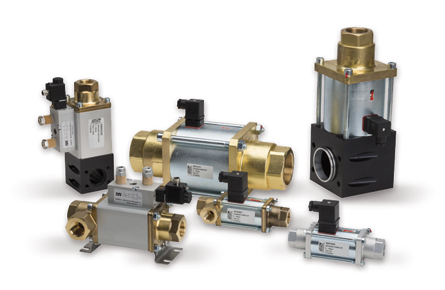

How do we contribute to innovation as a manufacturer?
With 40 years of experience in the development and marketing of valves for industrial applications, RSG develops CO₂ valves that set the standard. Our approach combines in-depth industry knowledge with state-of-the-art technology. From prototype development through to series production, we work closely with you to ensure that our products meet both your current and future requirements.
Our innovations are based on a modular system that offers maximum flexibility. Whether you need a standard valve or a custom solution, we deliver the perfect combination of performance, reliability, and efficiency.
CO₂ Valves: Technology and Manufacturing
How are CO₂ valves manufactured?
The manufacturing of our CO₂ valves involves a precise and optimized process that spans from material procurement to delivery. Every stage is designed to ensure the highest quality and safety.
The Development Process: From Concept to Production
Our development process begins with a detailed analysis of customer requirements. Engineers use CAD software to design valves that are both functional and efficient. Simulations and calculations help predict how the valves will perform under real operating conditions. After validation, the designs move from the prototyping phase to the pre-production phase. Once field trials are successfully completed, the products are transferred to mass production.
Prototyping and Simulation: Precision from the Start
Before a valve enters production, we create prototypes that are tested in-house in simulated environments and on-site at the customer’s facility. These tests ensure that the valves meet the requirements for pressure, temperature, and chemical resistance. Using state-of-the-art software solutions, we minimize errors and optimize designs at an early stage.
Material Selection: Why Stainless Steel and Optimized Sealing Materials?
For our CO₂ valves, we use only stainless steel and high-performance sealing materials for components that come into contact with the medium. These materials are specifically designed for use with CO₂ and are extremely wear-resistant. This ensures a long service life and minimizes maintenance requirements.
Assembly and Testing Procedures: Quality Steps in Detail
During the manufacturing process, our valves undergo rigorous testing procedures. These include:
- Leak teststo rule out leaks.
- Stress teststo ensure pressure resistance.
- Functional teststo ensure reliability in real-world applications.

Technical Specifications of CO₂ Valves
How do CO₂ valves work in high-pressure systems?
In high-pressure systems, our CO₂ valves precisely regulate the flow and pressure of the medium. Thanks to their robust design, they can withstand pressures of up to 130 bar. Their reliable performance ensures that systems operate safely and efficiently, even under extreme conditions.
Applications of CO₂ Valves
In high-pressure systems, our CO₂ valves precisely regulate the flow and pressure of the medium. Thanks to their robust design, they can withstand pressures of up to 130 bar. Their reliable performance ensures that systems operate safely and efficiently, even under extreme conditions.
In which industries are CO₂ valves essential?
CO₂ valves are essential in numerous industries, as they ensure efficiency, safety, and precision. The most important industries include:
- Refrigeration Technology: Due to the F-Gas Regulation, CO₂ valves have become an indispensable component in refrigeration and freezing systems, as well as in air conditioning units—particularly in environmental simulation and medical technology—since CO₂ represents an extremely environmentally friendly alternative to conventional refrigerants.
- Energy: In heat pumps and climate-friendly heating systems, they efficiently regulate the CO₂ cycle.
- Chemistry: You control highly complex processes that take place under high pressures and temperatures.
- Oil and Gas Industry: CO₂ is injected into oil fields to enhance oil recovery.
- Concrete and Construction Industry: CO₂ is used for curing concrete (carbon curing)
- Food and Pharmaceutical Industries: CO₂ valves are used in applications where strict hygiene regulations and process reliability are required. CO₂ is used to carbonate beverages such as beer, soda, and mineral water. A CO₂ atmosphere in packaging extends the shelf life of food products.
These valves are ideal for applications that require both high performance and precision, even under extreme conditions.


How do CO₂ valves optimize refrigeration systems and heat pumps?
Our CO₂ valves play a key role in the efficiency and performance of modern refrigeration systems and heat pumps, as they
- Compact
- Reliable
- Durable
- Energy efficient
- Easy to maintain
These features ensure that this valve offers excellent value for money and enhance our customers' competitiveness.
Quality and Safety
What testing procedures ensure the performance of our CO₂ valves?
To ensure the quality and reliability of our CO₂ valves, we subject them to a variety of rigorous tests:
- Leak tests: Ensure that no CO₂ escapes and that the valves remain tight even under extreme pressures.
- Stress tests: Simulation of real operating conditions, including high pressures and temperatures.
- Long-term testing: Performance evaluation after millions of switching cycles to ensure durability.
These tests are carried out in our own laboratory and also in cooperation with our customers, who conduct tests under real conditions in their own equipment. This close cooperation ensures consistently high quality.

How do we ensure that CO₂ valves can withstand the highest pressures?
Our CO₂ valves are specially designed for high-pressure applications. To achieve this, we rely on:
- High-strength materials: Stainless steel and high-performance sealing materials ensure maximum pressure and corrosion resistance.
- Precision Manufacturing: State-of-the-art CNC technologies and automated processes minimize manufacturing tolerances.
- Certified testing methods: Each valve is individually tested to ensure that it can withstand pressures of up to 130 bar without any problems.
Thanks to these measures, our valves can be used reliably even in the most demanding applications.
Inquire now – your valve solution starts here
Are you planning a new dosing system, looking to optimize processes, or searching for replacements for existing components?
Use our contact form —direct, secure, and non-binding.
Our team will get back to you quickly with a tailor-made solution. Together, we will find the valve that suits your application.
FAQ – Frequently Asked Questions About CO₂ Valves
The service life depends on the operating conditions. As a rule, our valves exceed millions of switching cycles and can therefore operate reliably for many years, especially with regular maintenance.
For CO₂ valves, we recommend stainless steel for the housing and high-strength sealing materials. These materials offer high pressure and corrosion resistance, resulting in a longer service life.
Our modular system allows valves to be customized. Depending on your needs, seals and connection options can be adapted to meet specific operational requirements.